Most pre-workout supplements are engineered to make you feel something — not to make you perform better. A clean pre-workout strips away the theater and keeps the ingredients that actually have evidence behind them.
I run a sublingual strip company, so I have a bias. I'll name it upfront and then try to be useful anyway. What I'm going to do here is walk through what the pre-workout industry actually puts in those neon tubs, what the clinical evidence supports, and why I think the format you take matters almost as much as the ingredients inside it.
The Problem Nobody in the Gym Talks About
Pick up the average pre-workout powder at any supplement store and flip it over. You'll find a "proprietary blend" — which is the supplement industry's way of saying "we'll tell you what's in here but not how much." Behind that label, the typical formula stacks 250–350mg of synthetic caffeine with beta-alanine (the tingle compound), artificial sweeteners, artificial colors, and a dozen underdosed extras that exist to pad the ingredient list, not to improve your workout.
The tingle is marketing, not pharmacology. Beta-alanine causes paresthesia — a harmless pins-and-needles sensation in your skin — at doses well below the threshold where it actually buffers lactic acid during exercise. The sensation makes you think the product is "kicking in." It's kicking your nerve endings, not your performance.
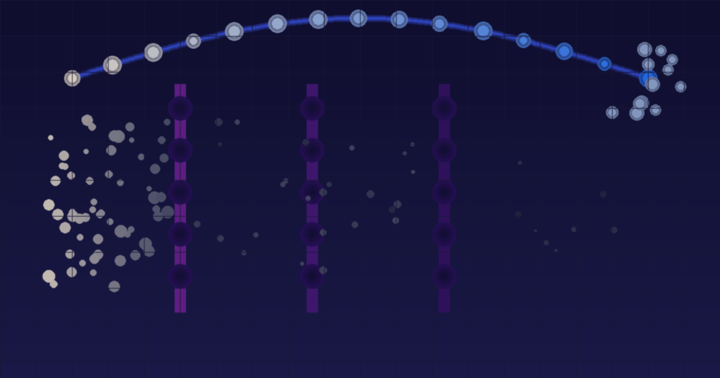
Then there's the caffeine. Three hundred milligrams of synthetic caffeine hits your bloodstream like a fist, peaks hard around 45 minutes, and drops you off a cliff two hours later. That spike-and-crash curve is the first-pass metabolism pattern — your liver processes the full oral dose in one pass, creating a sharp pharmacokinetic curve that feels intense but burns short.
And you're paying $1.50–$2.00 per serving for it.
What "Clean Pre-Workout" Actually Means
"Clean" is an unregulated word in supplements — anyone can print it on a label. So let me define what I mean by it, because this is a founder's compulsion, not a marketing line.
A clean pre-workout has a fully transparent label — every ingredient, every dose, no proprietary blends. It contains only ingredients with peer-reviewed evidence at clinically relevant doses. It skips synthetic caffeine, artificial sweeteners, artificial colors, and filler compounds that exist for label decoration. And it's third-party tested — manufactured in a cGMP-certified facility, not someone's garage.
That's it. No mysticism, no "ancient warrior formula," no appeals to a lifestyle you're supposed to aspire to. Just ingredients that work, at doses that matter, in a format that gets them where they need to go.
Why Onset Time Is the Pre-Workout Variable Nobody Optimizes
Here's something that's always bothered me about the standard pre-workout ritual: you mix a scoop of powder, drink 12–16 ounces of liquid, and then wait. The caffeine in that drink peaks in your bloodstream around 45 minutes after you swallow it. If you're walking into the gym at 6 AM, you need to be choking down a neon shake at 5:15.
Most people don't do that. They drink it in the car, start their warm-up, and the caffeine peaks midway through their second or third working set. By the time they hit their heaviest lifts, the curve is already falling.
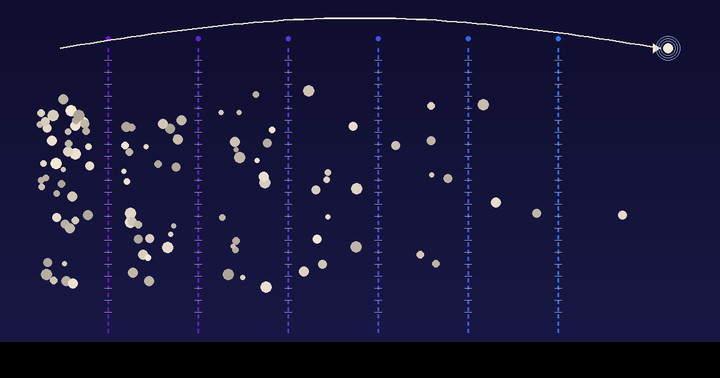
Bioavailability research shows that sublingual delivery — absorbing compounds through the thin mucosal tissue under your tongue — bypasses the stomach and first-pass liver metabolism entirely. For caffeine specifically, published pharmacokinetics data shows sublingual onset in roughly 15 minutes versus the 45-minute curve from oral ingestion (European Journal of Pharmaceutical Sciences). That's not a marginal difference. That's the difference between your caffeine peaking during your warm-up versus peaking during your drive home.
Thirty seconds under the tongue. Fifteen minutes to onset. You can take it in the locker room and be dialed in by your first working set.
L-Theanine and Caffeine: The Stack That Actually Has a Literature
If there's one ingredient pairing in all of sports nutrition that has earned its reputation through repeated, independent clinical testing, it's L-theanine paired with caffeine.
L-theanine is an amino acid found naturally in green tea leaves. When paired with caffeine, it does something that caffeine alone cannot: it increases alpha brain-wave activity — the neural signature of relaxed focus — while preserving caffeine's alertness and reaction-time benefits. Kelly and colleagues demonstrated this pairing improves sustained attention and task switching (Journal of Nutrition). A 2025 meta-analysis by Sun et al. in the Journal of Clinical Medicine confirmed the effect across multiple independent trials.
In practical terms: you get the lift without the jitter. The energy tapers gently instead of crashing. Your hands are steady on the barbell because your nervous system isn't spiking — it's focused.
This matters more than most lifters realize. The difference between a good set and a great set often isn't strength — it's concentration. The moment your mind drifts is the moment your form breaks. L-theanine keeps you in the rep.
Both the caffeine and L-theanine in XYNE's Energy Strips are green-tea sourced. No synthetic caffeine. The dose is in the clinically studied range for the pairing — enough to give you a clear lift, not so much that you feel wired. If you're used to a triple-shot americano, this won't replace it. It's cleaner, not stronger. I'd rather you know that upfront.
Methylcobalamin B12: The Energy Cofactor Your Pre-Workout Ignores
B12 doesn't get pre-workout attention because it doesn't make you tingle or buzz. But it's foundational to energy metabolism — it's a required cofactor for converting carbohydrates into glucose, the fuel your mitochondria burn during exercise.
Most pre-workouts that bother with B12 use cyanocobalamin — the synthetic, shelf-stable form your body has to convert before it can use. Oral cyanocobalamin has roughly 1.2% bioavailability (NIH Office of Dietary Supplements). That means for every 1,000 mcg you swallow, about 12 mcg makes it to your bloodstream.
Methylcobalamin is the coenzyme-active form — the form your cells actually use, no conversion step required. Sublingual methylcobalamin achieves roughly 51% bioavailability (Yazaki 2006), compared to about 13% for oral methylcobalamin. The sublingual route matters here: you're absorbing the active form through the mucosal membrane, skipping the stomach acid and liver metabolism that degrades the vitamin on the way through.
Will you feel B12 the way you feel caffeine? No. But over weeks of consistent use, you're supporting the metabolic machinery that converts your food into the ATP your muscles actually burn. It's the routine I'd put my mom on — not flashy, just foundational.
The 15-Minute Pre-Workout Protocol
Here's exactly what I do, and you can steal it or ignore it.
Fifteen minutes before I start my warm-up, I place one Energy Strip under my tongue. It dissolves in about 30 seconds. I don't chase it with water. I don't mix anything. I don't measure a scoop or wash a shaker bottle afterward.
By the time I've changed, filled my water bottle, and started my first mobility set, the caffeine and L-theanine are already crossing into my bloodstream through the sublingual mucosa. By my first working set — maybe 12–15 minutes in — I'm locked in. The focus is clean. The energy is steady. There's no urgency in my chest, no jitter in my grip.
On days I want additional cognitive support — a heavy skill session, or a workout that demands coordination (Olympic lifts, complex supersets) — I'll pair it with a Mushroom Focus Strip. Lion's mane and cordyceps, same sublingual delivery. But the Energy Strip alone handles 80% of my training days.
Total cost: about $1 per session. Total prep time: zero. Total liquid consumed: zero. Total shaker bottles washed: zero.
If your daily wellness stack already includes caffeine from coffee in the morning, count the strip toward your total. The FDA's general guidance for healthy adults is under 400mg of caffeine per day from all sources. I don't stack the strip on top of three coffees — I use it instead of the second or third cup.
When a Traditional Pre-Workout Powder Still Wins
I promised honesty, so here it is.
If you're a competitive powerlifter or bodybuilder training at genuinely high intensities — RPE 9–10, multiple sets past failure, the kind of sessions that make you question your life choices — a well-formulated powder with creatine monohydrate, citrulline malate, and properly dosed beta-alanine (3.2–6.4g/day, the dose where it actually buffers hydrogen ions, not the 1.6g that most brands use for the tingle) will give you performance benefits that caffeine and L-theanine alone won't match.
Creatine supports ATP regeneration during short, maximal efforts. Citrulline supports nitric oxide production and may reduce perceived exertion. These are compounds with substantial evidence behind them — and they need to be dosed in grams, not milligrams. You can't fit that into a sublingual strip. The format physically can't hold that much active material. That's a limitation I won't pretend away.
If you're an endurance athlete — marathon runner, cyclist, triathlete — your pre-workout needs are fundamentally different. You need glycogen, electrolytes, and fueling strategies that a strip isn't designed for. See a sports dietitian. They'll be more useful than any supplement.
The sublingual strip is built for the other 90% of training sessions: the Tuesday push day, the Thursday run, the Saturday HIIT class, the 6 AM session where you need to be sharp and focused but you're not competing for a national title. That's where clean, fast-onset, no-crash energy earns its place.
What I'd Tell You to Skip
If we're being honest — and that's what the whole premise of this brand is built on — here's what I'd tell you to stop wasting money on in the pre-workout category:
BCAAs (branched-chain amino acids) as a standalone pre-workout supplement, if you're already eating adequate protein. The evidence for BCAAs on top of sufficient protein intake is weak. Save the $35/month.
Any product with a "proprietary blend" on the label. If a company won't tell you how much of each ingredient you're getting, they're not confident in their doses. Walk away.
Anything promising "explosive energy" from a herb you've never heard of without citations. If the clinical evidence existed, they'd cite it. They don't, because it doesn't.
And testosterone boosters marketed as pre-workouts. If your testosterone is clinically low, see an endocrinologist. No supplement — including mine — is a substitute for medical evaluation.
Building a Minimalist Pre-Workout Stack
The best energy supplement stack is the one you actually use consistently. That's not a platitude — it's pharmacokinetics. The acute dose matters less than the habit. Caffeine tolerance adapts to your baseline; L-theanine's alpha-wave modulation is more pronounced with regular use; B12 status builds over weeks, not minutes.
Start with the minimum effective dose: one Energy Strip, 15 minutes before training. If you're caffeine-sensitive, start with half a strip your first week. Assess how you feel at minute 20, at minute 45, and at the end of your session. No jitter? No crash? Energy that tapers rather than drops? That's the signal that the pairing is working.
If you want more cognitive support, add a Mushroom Focus Strip. If you want creatine, take it separately — 3–5g of creatine monohydrate daily, any time of day (timing doesn't matter for creatine; saturation does). If you want citrulline, take it separately too — 6–8g, 30–60 minutes before training.
Don't let anyone sell you a 15-ingredient pre-workout when three ingredients with evidence will do the job. That's not minimalism for its own sake — it's minimalism because every extra ingredient is a variable you can't control, an interaction you can't predict, and a cost you're paying for a feeling, not a result.
Frequently Asked Questions
Can I use a sublingual strip as my only pre-workout?
For most training sessions — yes. Caffeine paired with L-theanine covers focus, alertness, and steady energy. Add creatine separately if you're training for maximal strength. The strip handles the stimulant side cleanly; stack the non-stimulant ergogenics on their own terms.
How much caffeine is in an Energy Strip?
The caffeine is green-tea sourced and dosed in the clinically studied range for the L-theanine + caffeine pairing. Keep total daily caffeine from all sources under 400mg per day (FDA general guidance for healthy adults). If you're already drinking coffee, count the strip toward that total.
Will I get the beta-alanine tingle?
No. There's no beta-alanine in the strip. The tingle in conventional pre-workouts is paresthesia — a nerve-ending sensation, not a performance signal. If you want beta-alanine's actual lactic-acid buffering effect, take 3.2–6.4g daily as a standalone supplement (it works through saturation, not acute dosing).
Is it safe to combine with coffee?
Yes, but count your total. Most people do well under 400mg of caffeine per day. If you've had two cups of coffee (roughly 190mg), the strip fits comfortably under the cap. If you're caffeine-sensitive, anxious, pregnant, nursing, or on medication — talk to your doctor first.
How does sublingual delivery compare to swallowing a pre-workout powder?
Sublingual absorption bypasses your stomach and first-pass liver metabolism, delivering actives directly into your bloodstream through the mucosal tissue under your tongue. For caffeine, this means onset in roughly 15 minutes versus 45 minutes from swallowing. The peak is smoother and the taper is gentler. See our full breakdown of how bioavailability works.
Related Reading
- L-Theanine: The Caffeine Companion That Actually Has Evidence
- Bioavailability Explained: Why Format Determines What You Absorb
- First-Pass Metabolism, Explained Like You're a Smart Friend
- The Daily Wellness Stack: A Pharmacokinetics-Backed Routine
- Best Morning Energy Supplements (2026)
- Sublingual vs Oral Supplements
*These statements have not been evaluated by the Food and Drug Administration. This product is not intended to diagnose, treat, cure, or prevent any disease.