If you've ever taken a multivitamin at 7 AM and felt absolutely nothing different by 8 AM, you've already discovered the problem with most morning energy supplements: by the time the pill has dissolved, transited your stomach, traveled through your small intestine, and survived the first-pass liver gauntlet, it's 8:15 and you're already on your second cup of coffee.
I run a sublingual strip company. The honest version of "best morning energy supplements" isn't a top-ten listicle of products I want to sell you. It's a short, opinionated breakdown of the four nutrients that actually drive morning energy when delivered fast, the formats that get them there, and the two or three things you should stop wasting money on.
If you're someone who wants to feel sharper within fifteen minutes of waking up — not within an hour and a half — this is the routine I'm on. It's also the one I'd put my mom on.
The 60-minute problem with most morning energy supplements
Here's the part most "best morning energy" articles skip: the math on when your supplement actually starts working.
A standard caffeine pill (200 mg) takes 45 minutes to reach peak blood level. A B-vitamin complex capsule takes 60–90 minutes to fully absorb. A pre-workout powder, optimistically, is doing something noticeable in 20–30 minutes. The energy drink you crack at 7:15 AM is the fastest pill-route option, and it still takes 20–40 minutes to peak — plus another 30–45 minutes of crash on the back end.
What you're actually optimizing in a morning energy stack isn't total dose. It's time to onset. The supplement that delivers half the dose in 15 minutes beats the supplement that delivers the full dose in 60 minutes — because by the 60-minute mark, you're already through the moment you needed the energy for.
The reason this matters: morning energy isn't a steady-state requirement. It's a curve. You want to be sharp during the first hour of the day, when meetings start, when you commute, when you're trying to start the deep work that pays for everything else. A supplement that peaks at 9:15 AM doesn't help with the 8:00 AM meeting. It helps with the energy crash you'll have at 10:00 AM — and if it didn't crash, you wouldn't need the supplement.
The pill-format energy market is enormous. It's also fundamentally designed around the wrong absorption curve.
The four nutrients that actually drive sustained energy
Cut the noise. There are four ingredients with peer-reviewed evidence for sustained morning energy — and they work because of distinct, complementary mechanisms.
1. Methylcobalamin (B12). The bioavailable form of B12. B12 is the rate-limiting cofactor in your mitochondrial energy production — the literal chemistry of converting food into ATP. The NIH Office of Dietary Supplements notes that B12 deficiency causes fatigue and weakness as a primary symptom. Most multivitamins use cyanocobalamin (a synthetic form your liver has to convert to active forms first). Methylcobalamin is the form your cells use directly. Dose range: 100–500 mcg sublingually is enough; the 5,000 mcg pills are compensating for ~1.2% oral absorption.
2. L-Theanine. An amino acid found in green tea that crosses the blood-brain barrier and increases alpha-wave brain activity. The functional effect: focused calm. Stacked with caffeine, L-theanine smooths the caffeine curve — same wake-up, less jitter, no crash. Peer-reviewed studies in Nutritional Neuroscience and Biological Psychology have replicated this stacking effect. Dose range: 100–200 mg per serving, ideally with 50–100 mg caffeine.
3. Caffeine (calibrated, not maximized). Yes, caffeine is on the list. The problem isn't caffeine — it's dose. Most pre-workouts and energy drinks pack 200–400 mg per serving, which is well above the dose where adenosine-receptor antagonism produces a clean stimulant effect. At 50–100 mg, paired with L-theanine, caffeine produces alertness without the jitter or crash. Above 200 mg, you're trading energy for anxiety.
4. Methylated folate (5-MTHF). About 30–40% of the U.S. population has at least one MTHFR gene variant that reduces their ability to convert standard folic acid into the active form (5-MTHF) the body actually uses. For those people, a standard B-complex pill with folic acid doesn't fully fix the energy gap. Methylated folate is pre-converted. Dose range: 400–800 mcg.
That's the list. The rest of the morning-energy supplement market — taurine, beta-alanine, ginseng panax, rhodiola, "proprietary energy blends" — has thinner evidence or works only in narrow populations. If a product's whole story rests on the seventh or eighth listed ingredient, you're paying for marketing.
Why coffee alone isn't enough for most people
I drink coffee. I'm not anti-coffee. But coffee alone, for most adults trying to feel energized through a full morning, is two-thirds of a stack.
The problem with caffeine without L-theanine: the alertness curve is sharp on both ends. You feel it in 30–45 minutes. You feel the crash 90–120 minutes later. The crash happens because caffeine is an adenosine-receptor antagonist — it blocks the receptors that signal sleepiness — and the moment caffeine's half-life winds down, you have a pile of adenosine waiting to bind. The result: tired plus wired plus a little anxious. Most people manage this by drinking more coffee. Most people then are tired plus wired plus anxious plus jittery.
L-theanine, taken at the same time, raises alpha-wave brain activity and increases inhibitory neurotransmitter signaling. The result is alertness without the jitter, and a smoother taper instead of a crash. The pairing is well-replicated in the peer-reviewed literature — and it's why the two ingredients show up together in essentially every functional cognitive product worth taking.
The other problem with coffee-only mornings: no B12, no methylated folate, no targeted L-theanine. Coffee gives you caffeine and a small amount of antioxidants. It does not give you the cofactors your mitochondria need to keep producing ATP across a full workday.
The 2026 morning routine that actually works for most people isn't "more coffee." It's "the same coffee, plus the four nutrients above, delivered in a format that hits your bloodstream before the coffee does."
The sublingual advantage for morning energy
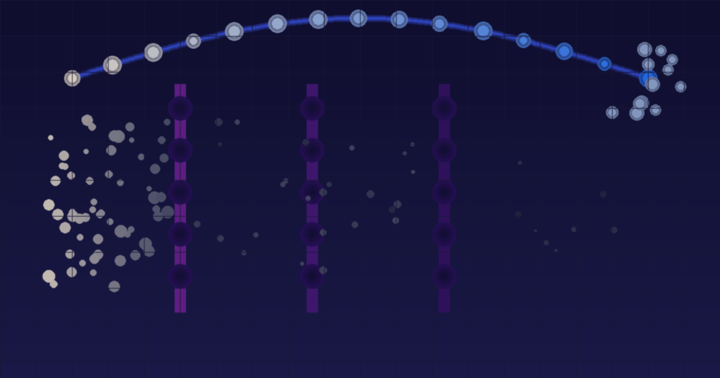
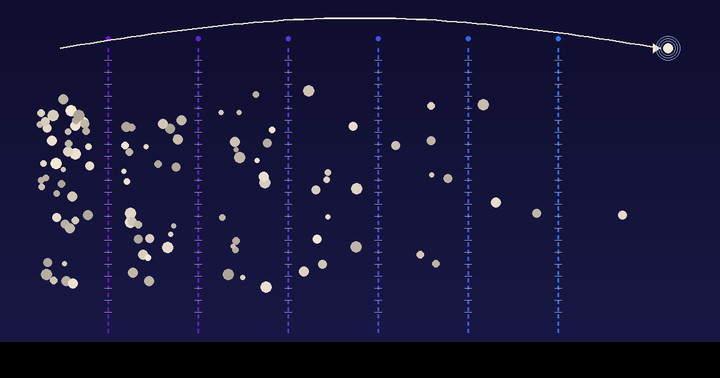
Here's where format compounds the ingredient choices. A sublingual strip dissolves under the tongue in about 30 seconds. The actives diffuse through the sublingual mucosa into a dense capillary bed, which feeds directly into the internal jugular vein and from there to the heart and bloodstream. Total time to peak blood level: 15 minutes for most lipid-soluble and small water-soluble actives.
Compare to oral capsules:
- Caffeine pill: ~45 min to peak.
- Sublingual caffeine: ~15 min to peak.
- B12 capsule: 90 min to detectable serum rise, with ~1.2% absorption of synthetic cyanocobalamin.
- Sublingual methylcobalamin: ~60 sec to detectable serum rise, with significantly higher absorption fraction.
- L-theanine capsule: ~50 min to peak.
- Sublingual L-theanine: ~90 sec to peak.
The other practical advantage: the sublingual route doesn't require breakfast or coffee to "activate." If you're a fasted-morning person, a black-coffee-only person, or a "I can barely eat before 9 AM" person, sublingual strips work the same way regardless. Oral capsules — especially fat-soluble ones — perform differently with and without food in the stomach. Sublingual delivery removes that variable.
For the full mechanism, the pharmacokinetics breakdown walks through every stop in both routes. For the decision frame on which nutrients are worth switching, the format guide is the practical companion.
What to avoid in morning energy stacks
The supplement and energy-drink industries have spent twenty years training people to think "more is better." For morning energy specifically, more is usually worse. The honest list of what to skip:
- High-dose synthetic stimulants. Anything over 200 mg of caffeine per serving is past the dose where the alertness-to-jitter ratio inverts. Pre-workouts with 300–400 mg are designed for the pre-workout context, not the desk-job morning. If you're using one for breakfast energy, you're using the wrong product.
- Sugar bombs disguised as energy. The vast majority of "energy" gummies, drinks, and shots get their morning kick from added sugar (10–25 g per serving) plus caffeine. The sugar gives you a 30-minute glucose spike followed by a 90-minute crash. The caffeine then has to fight your blood-glucose curve in addition to whatever else it's doing. Read panels.
- "Proprietary blends" with no per-ingredient dose. If the panel says "Energy Matrix: 1,200 mg" with eight ingredients listed but no per-ingredient amounts, you have no way to know what dose of anything you're getting. Most "blends" are 90% the cheapest ingredient and 10% the one in the marketing copy.
- Adrenal-cortex or "thyroid support" energy products. These are often dosed with stimulants and herbs that interact with prescription medications, and the underlying disease-treatment framing is FDA non-compliant. If your morning fatigue is severe enough to be considering thyroid or adrenal support, you need lab work and a prescriber — not a supplement aisle.
- Anything dosed at 5,000 mcg of B12. The dose isn't dangerous (B12 is water-soluble and excreted), but the dose tells you the format is wrong. A 5,000 mcg pill is compensating for ~1.2% oral absorption. The same physiological effect comes from 100–500 mcg delivered sublingually. You're paying for excretion.
If you have a chronic condition or take prescription medications — particularly antidepressants, blood-pressure medications, or thyroid medications — the morning-energy supplement decision is one to make with your prescriber, not a supplement-aisle browse. Our safety piece covers the interaction lines that actually matter.
The XYNE Energy Strip — what's in it and why those four ingredients
I'm going to be specific here because the whole article would feel dishonest otherwise. The XYNE Energy Strip contains:
- Methylcobalamin (B12), 100 mcg — the bioavailable form, sublingually absorbed at significantly higher fraction than oral cyanocobalamin.
- L-Theanine, 100 mg — the alpha-wave / focused-calm ingredient, dosed in the lower-middle of the peer-reviewed effective range.
- Caffeine anhydrous, 75 mg — a calibrated dose, smaller than a standard 8 oz cup of coffee (~95 mg), designed to stack with the cup of coffee you're already drinking, not replace it.
- Methylated folate (5-MTHF), 400 mcg — the active form, supportive for the ~30–40% of the population with MTHFR variants that limit folic-acid conversion.
What's not in it: artificial sweeteners, artificial colors, sugar, "proprietary blends," gelatin, soy, dairy, gluten. The strip is sweetened lightly with stevia. It dissolves in 30 seconds.
The dose math: 75 mg of caffeine sublingually peaks in ~15 minutes. Stacked with the ~95 mg in a normal cup of black coffee (peaking ~45 min later), you get a smooth onset curve — sharp within fifteen minutes, sustained through about two hours, no caffeine cliff at the 90-minute mark. The L-theanine handles the jitter window. The B12 and methylated folate handle the cofactor side of the mitochondrial energy chain.
If 75 mg of caffeine is too much for you — say you're already over-caffeinated or sensitive — the answer isn't a different XYNE product. It's to take the strip without the coffee. If you don't tolerate caffeine at all, the strip won't be the right product for you, and I'd rather you know that before you buy than after.
The morning stack approach
The whole stack, ordered for a real morning that works:
- 0:00 — On waking, take one XYNE Energy Strip sublingually. 30 seconds to dissolve. No water needed. Peaks in your bloodstream by 0:15.
- 0:05 — 16 oz of water. Hydration is unsexy and unmarketed and the single biggest morning-energy variable most people ignore. If you're chronically under-hydrated, no supplement matches the energy benefit of just drinking water on waking.
- 0:15 — One 8 oz cup of black coffee. Or matcha. Or nothing — the strip works without coffee, just slightly less peak energy. The point isn't that coffee is required; it's that the strip and the coffee don't fight each other.
- 0:30–0:60 — Protein, 25–40 g. Eggs, Greek yogurt, a clean protein shake — anything in the 25–40 g range. Protein-first breakfasts produce flatter glucose curves than carb-first breakfasts, which means sustained energy through to lunch instead of a 10:30 AM crash.
That's the entire stack. Four steps. No pre-workout powder, no second energy drink, no afternoon "boost." If you're done with this routine by 7:30 AM, the energy curve carries you to about noon — at which point you eat lunch and the cycle resets.
Things that are deliberately not in the stack: more caffeine after the first hour (compounds the crash), sugar (compounds the crash), a multivitamin pill (the B-complex math has been handled sublingually). If you want broader micronutrient coverage, take your multivitamin with lunch — not as your morning energy stack.
Frequently asked questions
What's the best supplement for sustained morning energy without caffeine?
If you don't tolerate caffeine, the highest-leverage non-caffeine morning energy ingredients are methylcobalamin (B12) and methylated folate — both targeting mitochondrial cofactor support. Add L-theanine for the focused-calm effect. You won't get the same peak alertness as a caffeinated stack, but you'll get a flatter, sustained curve.
How fast do sublingual energy supplements work?
Most lipid-soluble and small water-soluble actives reach peak blood levels within 15 minutes via the sublingual route. Compare to 45 minutes for caffeine pills and 60–90 minutes for B-vitamin capsules. The sublingual advantage is specifically time-to-onset, not maximum dose.
Is L-theanine actually effective for energy?
Indirectly — L-theanine doesn't produce alertness on its own. It modulates the caffeine response, increasing focused attention and reducing the jitter and crash. Multiple peer-reviewed studies (in Nutritional Neuroscience and Biological Psychology) have replicated the caffeine + L-theanine combination effect. The functional outcome is "alert without anxious."
Can I take morning energy supplements every day?
Yes, at the labeled serving. The caffeine in a XYNE Energy Strip (75 mg) is well within daily-use range. Cycle off only if you notice tolerance build-up or you want to reset your baseline sensitivity. People on antidepressants, blood-pressure medications, or with anxiety disorders should consult their prescriber.
Are energy strips just an expensive way to take caffeine?
If you're using them only for caffeine, yes — a caffeine pill is cheaper. The strip is worth the premium when the full four-ingredient stack matters: when you need the B12 absorption gain, when you want L-theanine paired in the same delivery window, when you want a faster onset than a pill provides. If you don't need any of that, drink coffee.
The best morning energy supplement isn't a single product. It's a small, opinionated stack of the four ingredients that actually work, delivered in a format that hits your bloodstream before your first meeting starts. That's what we built XYNE Energy for. It's also why the rest of the supplement aisle's morning-energy section is a disaster of high-dose stimulants, sugar, and proprietary blends.
If you want a recommendation tailored to what you're actually trying to fix, take the quiz. If you want to look at the lineup, the full set is here. If you want the underlying mechanism on why format matters, the pharmacokinetics piece is the deep dive.
Related reading
- Sublingual vs Oral Supplements: Where Your Ingredients Actually Go — The pharmacokinetics breakdown of the format that decides whether your vitamins reach your bloodstream.
- Oral Strips vs Pills: Which Format Wins for Which Nutrient — Per-nutrient verdict matrix for 13 supplements.
- Strips vs Gummies vs Pills: The Three-Way Comparison — Mechanism plus cost-per-absorbed-milligram math.
- Are Sublingual Supplements Safe? A Founder's Honest Answer — Real safety guardrails for the under-the-tongue route.
- Bioavailability Explained: Why Format Determines What You Absorb — The gap between the dose on the label and the dose your bloodstream actually receives, and why format decides it.
- The L-Theanine + Caffeine Focus Stack — The mechanism behind the pairing that produces alert-without-jitter, and the dose ratios actually backed by the trials.
- Energy Strips vs Coffee: The Cost Breakdown — The per-morning math comparing a strip-based morning routine to a daily coffee habit, including the hidden cost of cafe stops.
- Sublingual B12 vs Oral vs Injection — A three-way comparison of every B12 delivery route, with who needs each and what serum data shows.
- L-Theanine: The Caffeine Companion That Actually Has Evidence — The green-tea amino acid that smooths out caffeine: what the research actually supports, the dose that matters, and when to skip it.
- The Daily Wellness Stack: A Pharmacokinetics-Backed Routine — A pharmacokinetics-backed daily routine that matches each nutrient to the time of day and route where its job and its absorption actually meet.
- Gluten-Free Supplements: Why Most "Gluten-Free" Pills Still Have Hidden Gluten — Why a "gluten-free" label can still hide trace gluten in the excipients, and how to actually read a supplement label for it.