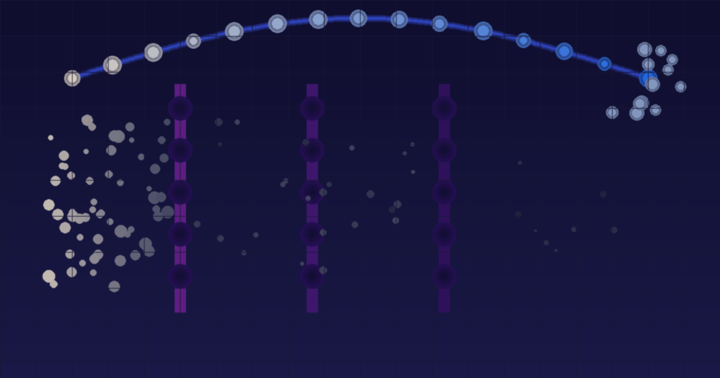
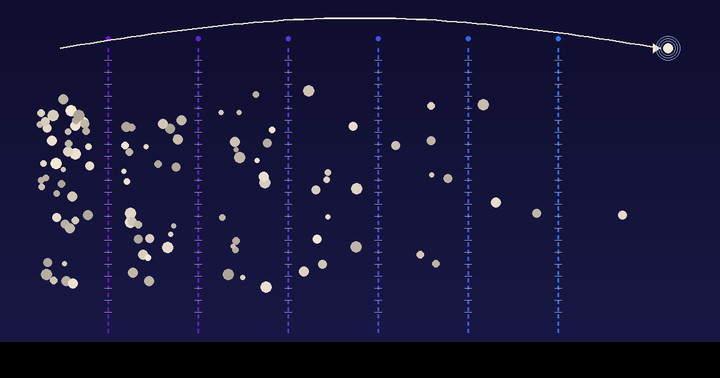
If you've ever dissolved a B12 strip under your tongue and wondered what was actually happening down there — not the marketing version, the actual biology — you're in good company. Most people don't think about it. The doctors who routinely prescribe sublingual nitroglycerin for chest pain or sublingual buprenorphine for opioid maintenance don't usually explain it either. The route gets used because it works. The mechanism gets glossed over.
I run a sublingual supplement company. The mechanism isn't optional for me — it's the entire engineering constraint we design around. Which molecules will diffuse across the mucosa? Which ones won't? What does "30 seconds to bloodstream" actually mean in cellular terms? I had to learn this in detail to build a product that wasn't just marketing the geometry.
This is the version I'd give to a smart friend who wanted the real answer. It's not the comparison piece with oral capsules — that lives here. This is the mechanism by itself, from the moment a molecule lands on your sublingual mucosa to the moment it shows up in your superior vena cava.
The anatomy under your tongue (most of which you've never heard of)
The tissue under your tongue is called the sublingual mucosa. Look in a mirror, lift your tongue, and you're staring at it. Three things make this tissue special as an absorption surface.
First, it's thin. The sublingual mucosa is roughly 100–200 micrometers thick — about a tenth as thick as the buccal mucosa lining your cheeks, and an order of magnitude thinner than skin. Thin means short diffusion distance, which means fast.
Second, it's non-keratinized. The outermost layer of your skin and the lining of your hard palate is keratinized — dead, tough, water-resistant cells designed to keep things out. The sublingual mucosa skips that layer. The cells are alive, hydrated, and porous to small molecules.
Third, the blood supply directly underneath is dense. A network of sublingual veins runs millimeters below the mucosal surface, fed by capillaries that absorb molecules diffusing across the epithelium. Those veins drain into the lingual vein, then the internal jugular vein, then the superior vena cava — your heart's intake. From there, into systemic circulation.
The whole point of sublingual delivery is that the molecule's path from mouth to bloodstream is short, doesn't cross a keratinized barrier, and avoids the gut and liver entirely. Once it's across the epithelium, it's in your blood.
The 500 Dalton threshold (and why it decides everything)
Not every molecule can cross the sublingual mucosa. There's a rough size limit, and it's worth understanding because it tells you which supplements the format can actually deliver.
The threshold pharmacologists use, derived from dermal and mucosal permeability research summarized by Bos & Meinardi (2000) in Experimental Dermatology, is roughly 500 Daltons. Below 500 Da, molecules tend to cross mucosal membranes via passive diffusion at clinically meaningful rates. Above 500 Da, diffusion drops off sharply, and you generally need specialized absorption enhancers, transporter proteins, or a different route entirely.
For reference: methylcobalamin (B12) is about 1,344 Da, which is technically above the threshold — but its absorption uses both passive and active mechanisms, and it crosses well enough sublingually that medical practice has used the route for B12 repletion for decades. L-theanine is 174 Da, well under the limit. Curcumin is 368 Da, comfortably below. Caffeine is 194 Da, trivial. Most of the molecules that work in a sublingual strip cluster between 150 and 600 Da.
What this rules out: most polysaccharides, most peptides over a few amino acids, most proteins, fiber, and large complex actives like whole-mushroom extracts unenriched for the small-molecule fraction. The format isn't a universal solvent — it's a route with specific size preferences.
Passive diffusion vs paracellular transport: the two doors
Once a molecule lands on the sublingual mucosa, it can cross into the bloodstream through one of two pathways. Most actives use a mix.
Passive transcellular diffusion is the lipid-loving route. The molecule dissolves into the lipid bilayer of the epithelial cells, passes through the cell, exits into the underlying tissue, and diffuses to a capillary. This pathway favors small, lipophilic (fat-soluble) molecules. Nicotine, the cannabinoids, melatonin, and many small organic actives travel this way. Faster, but limited to molecules that play nicely with cell membranes.
Paracellular transport is the route between cells, through the tight junctions that hold the epithelial sheet together. Smaller water-soluble molecules — cyanocobalamin, methylcobalamin, certain salts — use this route. It's slower per molecule than transcellular diffusion, but it accommodates more polar (water-loving) compounds that wouldn't survive a trip through the lipid bilayer.
What this means for a strip's design: balancing the lipophilicity (the partition coefficient, often called log P) of the active matters. Pharmacologists talk about an ideal log P range of roughly 1–3 for sublingual delivery — lipophilic enough to cross cell membranes, water-soluble enough to actually dissolve in saliva first. That's why you sometimes see two forms of the same nutrient in different products: one formulator picked the form with better log P for the sublingual route.
Why the liver doesn't get a turn
The biggest single benefit of sublingual delivery isn't speed — it's what the route avoids.
When you swallow a pill, every molecule you absorb in your gut gets routed through the portal vein directly to your liver before reaching the rest of your body. The liver runs absorbed compounds through cytochrome P450 enzymes that modify their chemical structure. For some compounds (vitamin D3, for instance) this is fine and even necessary. For others, first-pass metabolism strips out 50–99% of the compound before it ever reaches systemic circulation. Unenhanced curcumin loses about 99% of its dose to a combination of poor absorption and aggressive hepatic conjugation, per the bioavailability review by Anand et al. (2007) in Molecular Pharmaceutics.
Sublingual delivery routes the molecule into the internal jugular vein, into the superior vena cava, and into the heart — which then pumps it through systemic arterial circulation. The liver does eventually see the compound after a few circulation loops, but by then it's already been distributed to the tissues that need it. The brain doesn't have to wait for the liver to take a chunk first. The bloodstream doesn't have to settle for the hepatic remainder.
This is why sublingual nitroglycerin acts on chest pain within 1–2 minutes — the cardiac tissue receives the molecule before any first-pass metabolism happens. It's why supplements that bypass the stomach exist as a recognized category. And it's why, for the right molecules, the format is genuinely an upgrade rather than a marketing repositioning.
What the 30-second timer actually counts
The "30 seconds to bloodstream" framing oversimplifies a process that actually has three overlapping phases.
Phase 1: film dissolution (~0–30 seconds). The pullulan film starts dissolving on contact with saliva, releasing actives into a thin layer at the mucosal surface. By 30 seconds, the film is essentially gone.
Phase 2: mucosal absorption (~30–120 seconds). Released actives diffuse across the epithelium and reach the underlying capillary bed. For small lipophilic molecules, peak concentration at the capillaries occurs in 1–2 minutes.
Phase 3: systemic distribution (~2–10 minutes). The active enters the venous return, reaches the heart, and is pumped through arterial circulation to tissues. "Bloodstream" is technically achieved within the first phase, but "effect at tissue" usually takes a few minutes more depending on the active and the target.
For cyanocobalamin, time-to-peak-plasma-level sublingually is around 45 seconds, vs roughly 90 minutes for an oral capsule per NIH-summarized clinical pharmacokinetics. For sublingual caffeine, peak is around 15 minutes vs ~45 minutes oral per European Journal of Pharmaceutical Sciences data. Real effects on real tissues unfold across the same minutes. The "30 seconds" line is shorthand for "crosses the membrane in seconds, no longer needs the gut" — not a literal effect-onset timer.
When the mechanism doesn't help
This is the section where I disqualify some of the products you've seen marketed as sublingual.
Probiotics for gut colonization. The bacteria need to reach your intestines alive. Sublingual delivery routes them into the bloodstream past the destination, where they don't establish colonies. Sublingual probiotics make sense only for oral microbiome support and systemic postbiotic effects — not the traditional gut-flora job.
Large polysaccharides and whole-spectrum extracts. Above the ~500 Da threshold, mucosal absorption falls off sharply. Whole-mushroom extracts that include the cell-wall polysaccharide fraction don't fully absorb sublingually — you want the standardized small-molecule fraction (β-glucans concentrated and enriched) for the route to make sense.
Bulk minerals. Calcium, magnesium, iron at standard doses need either the acidic stomach environment to ionize properly or simply more milligrams than a thin film can carry. The mechanism doesn't fail; the dose ceiling does.
Fiber and bulk powders. Volume alone disqualifies them from a film. The route doesn't even matter — the format physically can't carry the load.
Format matches mechanism matches molecule. If any of those three break, the route doesn't deliver on the promise.
What XYNE engineers around the mechanism
Designing a strip means working backward from the mucosal limits. A few examples of what that looks like in practice:
We pick the active form, not just the active. Methylcobalamin over cyanocobalamin where the dose math works. Standardized lion's mane β-glucan fraction over whole-mushroom powder. The form decides whether the route delivers.
We dose to what a film can carry. 50–150 mg of active per strip is the practical ceiling. We don't pretend a film can deliver a 1,000 mg vitamin C dose. The nutrients in the lineup are the ones where 50–150 mg of well-absorbed active is the clinically meaningful range.
We protect against oxidation. Methylcobalamin loses potency on oxygen exposure. Individual foil pouches aren't packaging theater — they're a stability requirement. Bulk-pouched B12 strips lose meaningful potency before the bottle is finished.
We don't make sublingual versions of nutrients that need the gut. No XYNE sublingual calcium. No sublingual magnesium glycinate. No gut-colonization probiotic strip. Discipline about what we won't do is more honest than capitulating to format-pure marketing.
Founder's compulsion, not a marketing line. The mechanism gets to vote on the lineup.
Frequently asked questions
What is the sublingual mucosa made of?
It's a non-keratinized stratified squamous epithelium roughly 100–200 micrometers thick, sitting over connective tissue laced with a dense capillary network. The absence of keratin and the thinness of the layer are what make it a fast absorption surface.
How fast does a molecule reach the bloodstream from under the tongue?
Lipid-soluble small molecules can reach the underlying capillaries within 30–60 seconds of mucosal contact. Larger or more water-soluble molecules take longer — sometimes 2–5 minutes. Peak blood concentration occurs anywhere from 1 to 15 minutes after the strip dissolves, depending on the active.
Does swallowing during a sublingual strip ruin it?
Mostly, but not entirely. The actives that have already crossed the mucosa are in your bloodstream. Anything still in saliva gets swallowed and follows the standard oral absorption pathway — lower efficiency for sublingual-favored actives. Holding the strip under your tongue for the full dissolve maximizes the route's advantage.
Why does molecular weight matter for sublingual absorption?
Mucosal absorption uses passive diffusion as its dominant mechanism. Diffusion rate falls off sharply above roughly 500 Daltons because the molecule has to fit between or through the tightly arranged epithelial cells. Larger molecules diffuse too slowly to absorb in clinically meaningful amounts before they're cleared by saliva or swallowed.
Can the mechanism deliver peptides or proteins?
In limited cases, with specialized formulation. Small peptides like oxytocin or vasopressin can absorb sublingually with absorption enhancers, and the route is used in some specialty pharmaceutical products. Most supplement-relevant peptides are too large or too unstable in saliva for routine delivery. This is an active formulation research area, not a mass-market reality yet.
The mechanism, compressed: thin epithelium, no keratin, capillaries millimeters below, no first-pass metabolism, with a 500 Da molecular weight ceiling. For the molecules that fit, the route is genuinely fast and efficient. For the molecules that don't, no marketing copy can change the biology.
If you want to see which actives match the mechanism in a real product lineup, the quiz matches your goal to the strips that fit. Or browse the whole lineup — every panel lists the active form, the dose, and the rationale.
Related reading
- Sublingual vs Oral Supplements: Where Your Ingredients Actually Go — The route-vs-route comparison piece.
- Supplements That Bypass the Stomach — Every format that skips first-pass metabolism, ranked by speed.
- What Is Pullulan? — The plant polysaccharide that makes the film delivery format possible.
- Bioavailability Explained — The gap between dose-on-the-label and dose-in-your-blood, in plain English.